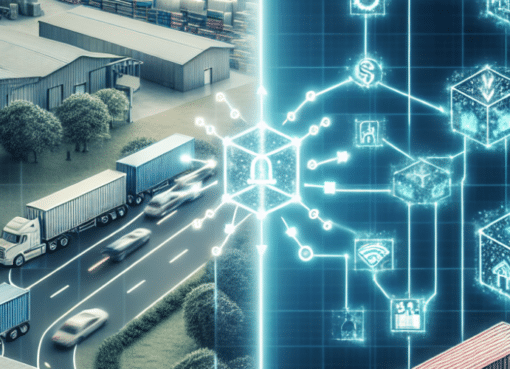

As the world edges towards recovery from the pandemic-induced economic disruptions, a significant technological advancement in the form of blockchain technology is making headlines for its revolutionary impact on global supply chains. Companies worldwide are increasingly integrating blockchain to enhance transparency, efficiency, and trust in supply chains, signaling a major shift in how business operations are conducted.
The integration of blockchain into supply chains has been a growing trend, but the recent surge in its adoption can be attributed to the pressing need for more resilient and reliable business operations that came to light during the COVID-19 pandemic. The pandemic exposed vulnerabilities in the global supply networks, where a lack of visibility and coordination led to delays, spoilage, and financial losses. In response, industries from manufacturing to retail are turning to blockchain for solutions.
Blockchain, essentially a digital ledger technology, records information in a way that makes it difficult or impossible to change, hack, or cheat the system. This inherent security feature is crucial for supply chains, where the authenticity and safety of products, especially in sectors like pharmaceuticals and perishable goods, are paramount.
One such implementation that exemplifies this trend is by a leading pharmaceutical company, which recently announced the successful deployment of a blockchain-based tracking system for its vaccine distribution. This system ensures that every vial of vaccine is tracked from production to delivery, reducing the risk of counterfeiting and enabling real-time tracking to manage and prevent bottlenecks.
In the food industry, major retailers are using blockchain to trace the journey of food products from farms to stores. This not only assures consumers of the product’s quality and origin but also quickly isolates and addresses any contamination issues, thereby significantly reducing the risk of foodborne illnesses.
The technology is also making significant inroads in the electronics sector, where companies use blockchain to certify the ethical sourcing of minerals used in consumer electronics. By tracing the origin of materials such as cobalt and lithium, companies are able to ensure compliance with international laws and standards on human rights and environmental protection.
Financially, the adoption of blockchain can lead to considerable cost savings for companies by streamlining supply chain processes. A report by Gartner predicts that blockchain will support the global movement and tracking of $2 trillion of goods and services annually by 2023.
However, while the benefits are clear, the adoption of blockchain in supply chains is not without challenges. The primary barrier is the integration of this technology into existing systems and processes, which can be costly and time-consuming. Additionally, there is a need for regulatory frameworks that can keep pace with the fast-evolving technology to address issues related to privacy, data security, and international trade.
Despite these hurdles, the momentum behind blockchain technology continues to build. More and more companies are not just piloting but fully integrating this technology into their operational frameworks. Industry experts believe that as blockchain platforms become more user-friendly and interoperable, the adoption rates will only accelerate, paving the way for a new era in supply chain management.
Economic analysts are optimistic about the potential economic impact of blockchain technology. By enhancing the efficiency and reliability of supply chains, blockchain could play a crucial role in boosting global trade and economic activities, which are vital for the recovery post-pandemic.
As businesses and economies adapt to the new normal, blockchain stands out not just as a technological innovation but as an essential tool for rebuilding and strengthening global supply chains. The ongoing developments in this field are not just promising but are setting the stage for a more interconnected and transparent global market.
In conclusion, the increasing implementation of blockchain in global supply chains is a testament to its potential in transforming industries. As we move forward, it will be interesting to see how this technology evolves and the long-term impact it will have on global economic systems, making it a key area to watch in the coming years.