
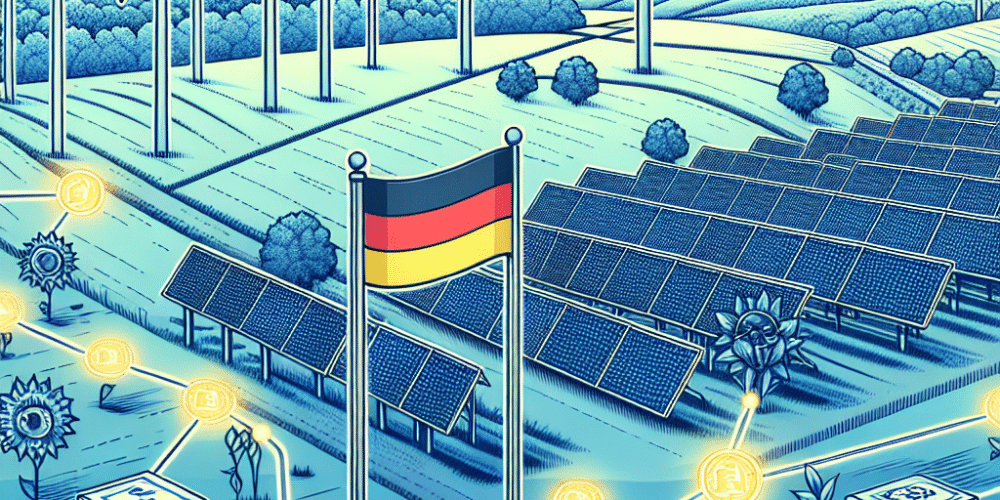
In a groundbreaking move that signals a potential revolution in the renewable energy market, Germany has successfully implemented a blockchain-based energy trading platform. This transformative innovation not only optimizes the utilization of renewable energy sources but also empowers consumers by enabling them to partake directly in energy trading.
Launched earlier this month, the platform is a collaborative effort led by EnerChain, a consortium of Europe’s leading energy companies. The technology allows for the decentralized trading of energy, where producers can sell their surplus renewable energy directly to consumers without the need for traditional energy suppliers. This peer-to-peer exchange not only increases the efficiency of energy distribution but also significantly reduces the cost associated with energy trading.
The use of blockchain technology in this capacity is a first in the energy sector. Blockchain, a technology best known for underpinning cryptocurrencies like Bitcoin, provides a secure and transparent way to record transactions. In the context of energy trading, it ensures that every transaction is recorded securely and immutably, offering a clear trace of energy sourcing and usage.
How Does It Work?
The blockchain platform uses smart contracts, automatic digital contracts that execute transactions when certain conditions are met, thereby eliminating the need for intermediaries. This means that when a solar panel produces excess energy, the smart contract automatically detects this and looks for potential buyers, executing the sale without human intervention.
This system not only speeds up the transaction process but also opens up new opportunities for consumers to buy green energy directly from local producers, potentially at lower prices. The transparency inherent in blockchain technology also means that consumers can verify the source of their electricity, reassuring them that they are indeed using renewable energy.
Environmental and Economic Impact
The environmental impact of this new trading platform could be significant. By making it easier and more economical to trade renewable energy, Germany’s blockchain platform is expected to lead to higher usage of renewable sources, thus reducing reliance on fossil fuels. This shift is crucial in the fight against climate change, as reduced fossil fuel consumption directly correlates with lower carbon emissions.
Economically, the platform could transform the energy market by breaking down monopolistic structures and lowering barriers to entry. Smaller producers of renewable energy, who typically struggle to compete with large utility companies, suddenly have direct access to the market. This could lead to increased competition, driving down prices and stimulating innovation in renewable energy technologies.
Global Implications
While currently operational only in Germany, the success of the blockchain energy trading platform could inspire similar initiatives worldwide. Countries with high investments in renewable energy, such as Denmark and Canada, are already showing interest in adopting similar technologies.
Furthermore, the International Renewable Energy Agency (IRENA) has expressed interest in exploring how blockchain can be leveraged globally to enhance the deployment of renewable energy solutions. Such international collaboration could pave the way for a global green energy market, interconnected through blockchain, allowing for an efficient worldwide energy distribution system that benefits both the planet and the economy.
The Road Ahead
Despite the promising start, challenges remain. Regulatory hurdles are a significant concern, as current energy laws in many countries are not designed to accommodate decentralized energy trading. There is also the issue of technological scalability. The current infrastructure must be capable of handling potentially millions of transactions as more participants join the platform.
Nevertheless, Germany’s pioneering platform has set the ball rolling for a potentially global transformation in how we produce, trade, and consume energy. As this platform continues to evolve, it could very well redefine not just energy markets, but also how we approach environmental sustainability and economic growth in the era of blockchain technology.
In conclusion, Germany’s introduction of a blockchain-based energy trading platform marks a pivotal moment in both the tech and renewable energy sectors. This innovative approach could herald a new era in energy consumption, characterized by greater efficiency, lower costs, and significantly reduced carbon footprints, aligning with global efforts for a sustainable future.