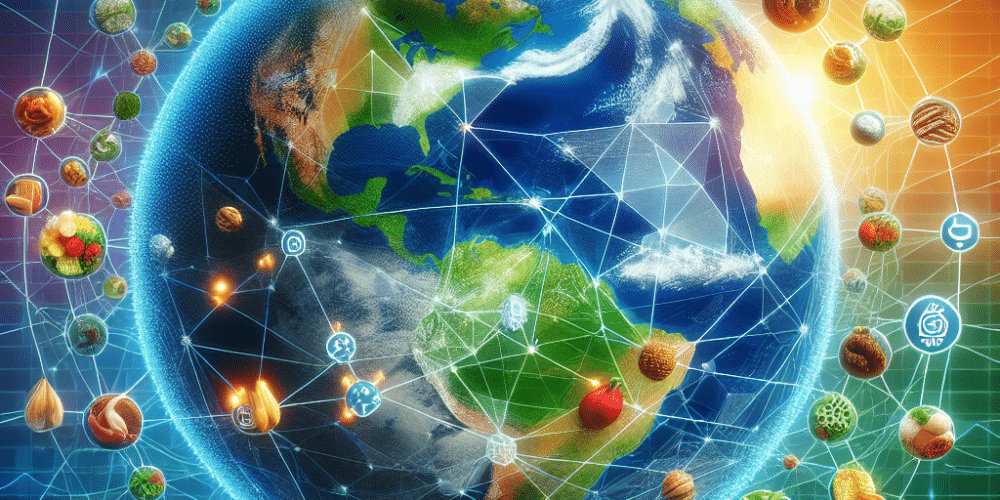
In a landmark move, several leading global food conglomerates have announced plans to utilize blockchain technology to bolster food traceability and safety across their supply chains. The initiative, which is set to revolutionize the food industry, aims at enhancing transparency and building consumer trust amid rising concerns about food quality and origin.
This adoption of blockchain technology in the food sector isn’t just a trend but a necessary evolution. With increasing incidents of foodborne illnesses and growing public demand for transparent sourcing, companies are turning to blockchain as a solution. The distributed ledger technology promises to provide a verifiable and immutable record of every transaction or movement of goods from farm to table, potentially eliminating many of the current pitfalls in food safety.
The Blockchain Solution
The companies involved, including household names like Nestlé, Unilever, and Tyson Foods, are planning to integrate blockchain into their operations in phases. Initially, the focus will be on high-risk products such as poultry and seafood, where traceability is often a challenge due to the complex supply chains and numerous stakeholders involved from production to retail.
Blockchain technology will enable all parties in the supply chain to access the same information in real-time, significantly reducing the time it takes to trace the origin of goods in the event of contamination. This not only enhances the safety protocols but also minimizes the economic impact associated with recalls.
Impact on Global Food Supply Chains
Experts predict that blockchain’s impact on the food industry could be profound. By providing an unalterable record of every product’s journey, blockchain technology will help reduce fraud, which is particularly rampant in the industry. Mislabelled products and false claims about origins and organic certifications can be combatted effectively with blockchain, ensuring compliance and authenticity.
Moreover, blockchain can lead to greater efficiency in logistics. By automating many of the tracking and recording processes, blockchain could potentially reduce wastage and improve the management of perishable goods, cutting down on losses and ensuring products are fresh when they reach consumers.
Consumer Benefits and Market Response
From a consumer perspective, this move is likely to be met with enthusiasm. Today’s consumers are more conscious than ever about what they eat. The demand for organic and responsibly sourced food continues to grow, and with blockchain, consumers can have instant access to detailed information about where their food came from and how it was handled.
Feedback from initial market surveys indicates that transparency provided by blockchain could also influence purchasing decisions, with many consumers likely to prefer brands that offer complete supply chain visibility.
Challenges and Future Prospects
Despite the optimism, the integration of blockchain into such a complex and global industry is not without challenges. One of the significant hurdles is the need for all players in the supply chain to adopt the technology. Since blockchain systems work best when they are inclusive, partial adoption could limit the potential benefits.
Additionally, there are concerns about the technical scalability of blockchain systems and the need for substantial initial investment in technology and training. However, as technology advances and more companies come on board, these issues are expected to diminish.
Conclusion
The decision by leading food companies to adopt blockchain technology marks a significant step forward in the quest for more safe and transparent food supply chains. While there are challenges to face, the potential benefits in terms of safety, efficiency, and consumer satisfaction are undeniable. As this technology continues to evolve, it could very well set the new standard in the industry, much like how health and safety certifications did in the past decades.
The move also represents a bold commitment to innovation and consumer trust, positioning these companies as leaders in the global effort to enhance food integrity in the 21st century. As blockchain technology matures, it will be intriguing to see how widespread its adoption will become across other sectors.