
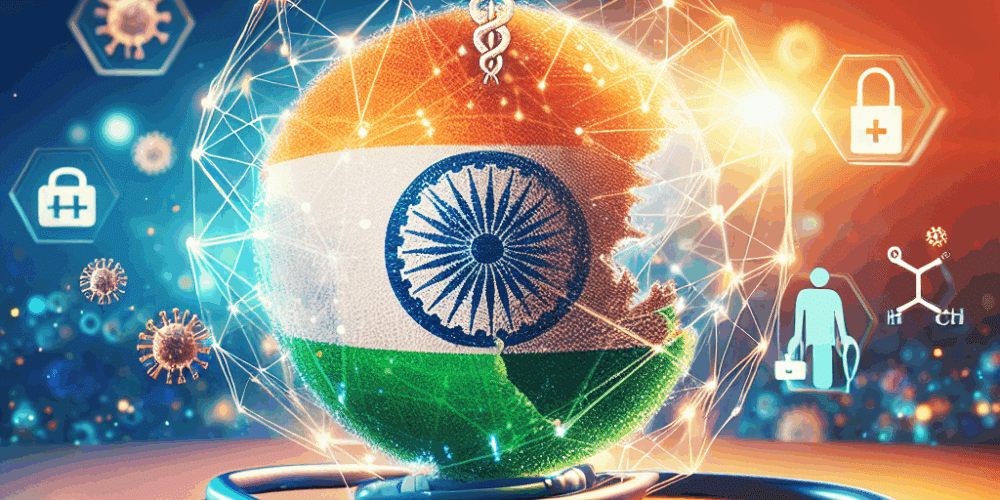
In an unprecedented move highlighting India’s commitment to technological innovation in its healthcare sector, the government has announced the launch of a blockchain-enabled platform designed to revolutionize the management of medical records across the nation. As the world continues to grapple with the challenges posed by the COVID-19 pandemic, this initiative marks a significant stride towards enhancing the security and efficiency of healthcare services in India.
The platform, named MedChain, was unveiled earlier this week by India’s Ministry of Health and Family Welfare in partnership with several leading technology and healthcare institutions. MedChain is intended to provide a unified and secure system for storing and accessing medical records, aiming to ensure data privacy and reduce the instances of fraud in medical documentation.
Why Blockchain?
Blockchain technology is renowned for its robust security features, primarily its ability to maintain a decentralised and tamper-proof database. For healthcare, this means that once a piece of data, such as a medical record or a prescription, is added to the blockchain, it cannot be altered or deleted without the consensus of all parties involved. This feature is crucial in a country where medical record tampering and privacy breaches remain significant concerns.
Moreover, blockchain facilitates real-time updating and sharing of medical records among authorized personnel, which can significantly improve the efficiency of patient care services. For instance, in emergency situations, doctors could gain immediate access to a patient’s complete medical history, enabling quick and informed decisions that could potentially save lives.
The Scope of MedChain
MedChain is set to be implemented in two phases. The initial phase focuses on the integration of the system across all government healthcare providers, including primary care centers and public hospitals. The second phase will see its expansion to include private healthcare providers, pharmacies, and eventually, insurance companies.
In addition to medical records, the platform will handle various other types of health-related data, including vaccination records, lab reports, and information on medical prescriptions. This comprehensive approach not only enhances service delivery but also paves the way for more in-depth research and analysis of health trends and disease patterns across the country.
Potential Benefits and Challenges
The benefits of such a system are manifold. By ensuring that medical records are accurate, secure, and easily accessible, MedChain aims to significantly improve patient care standards. It can also aid in tackling issues like prescription drug abuse and the resale of counterfeit medication, as every transaction recorded on the blockchain can be traced back to its origin.
However, the rollout of such a technology-intensive project across a country as vast and diverse as India does not come without its challenges. Issues such as digital literacy, infrastructure readiness, and public acceptance of digital records are critical hurdles that the government will need to address. Moreover, the integration of such a platform with existing digital health applications poses both technical and regulatory challenges.
Global Implications and Future Prospects
The launch of MedChain is being keenly watched by healthcare professionals and technologists around the world, as it represents one of the most extensive applications of blockchain technology in public healthcare to date. If successful, this model could serve as a blueprint for other nations looking to leverage blockchain to enhance their healthcare systems.
Looking ahead, the Indian government plans to further explore the applications of blockchain in other areas of public administration, including education and agricultural supply chains. Such initiatives, if successful, could mark a new era of governance, characterized by increased transparency, efficiency, and security.
In conclusion, while the journey ahead for MedChain is fraught with challenges, its successful implementation could dramatically transform the landscape of healthcare in India. It stands as a testament to the nation’s readiness to adopt next-generation technology to solve longstanding issues, serving as a beacon of innovation during these trying times.