
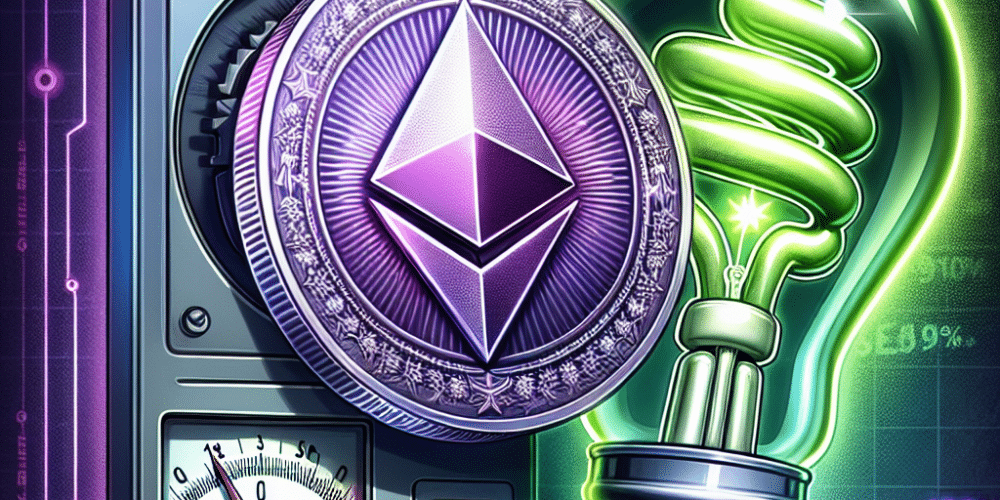
In a landmark event for the cryptocurrency industry, Ethereum, the world’s second-largest cryptocurrency by market cap, has successfully completed a significant upgrade known as “The Merge.” This upgrade marks a critical shift from the energy-intensive proof-of-work (PoW) mechanism to a much more energy-efficient proof-of-stake (PoS) system. The transition, which took place earlier this week, has been hailed as a revolutionary step towards reducing the blockchain’s carbon footprint by an estimated 99%.
A Shift Towards Greater Sustainability
For years, the cryptocurrency sector has faced intense scrutiny and criticism over the environmental impact of digital mining. Traditional PoW, the mechanism originally used by both Bitcoin and Ethereum, requires extensive computational power, which in turn leads to significant energy consumption and a hefty environmental toll.
Ethereum’s transition to PoS changes this dynamic fundamentally. In a PoS system, validators are selected to create new blocks based on the number of coins they hold and are willing to “stake” as collateral rather than on their computational power. This method drastically reduces the amount of electricity required to maintain the network.
Implications for Investors and Developers
The successful implementation of The Merge has immediate implications for both investors and developers within the Ethereum ecosystem. For investors, the reduction in energy consumption not only alleviates ethical concerns about the environmental impact of their investments but also potentially broadens the appeal of Ethereum to more sustainability-conscious individuals and institutions.
Developers, on the other hand, may see increased opportunities as the upgraded network promises to be more scalable and secure. The efficiency of PoS could lead to lower transaction fees and faster processing times, which could further enhance the appeal of Ethereum as a platform for developing decentralized applications (dApps).
Market Reaction and Future Prospects
The market’s reaction to The Merge has been cautiously optimistic. Ethereum’s price saw a moderate increase following the announcement of the successful upgrade, although it remains subject to the usual volatility inherent in cryptocurrency markets. Experts suggest that the full economic effects of this transition will likely unfold over the coming months as the network stabilizes and more users and developers engage with the new system.
Looking ahead, Ethereum’s shift could set a precedent for other cryptocurrencies wrestling with similar environmental concerns. The broader adoption of PoS mechanisms could be a significant trend in the next few years, especially as regulatory bodies around the world increase their scrutiny of the environmental impacts of digital technologies.
Conclusion
Ethereum’s successful upgrade to a proof-of-stake model represents a pivotal moment in the cryptocurrency world. By addressing one of the most critical criticisms of blockchain technology—its environmental impact—the Ethereum community has not only enhanced the sustainability of its own network but also set a benchmark for others in the industry. As the global community becomes increasingly aware of and responsive to environmental issues, such innovations will likely play a vital role in the future of finance and technology.
The Merge stands as a testament to the potential for technological solutions to align with broader societal goals, including sustainability and environmental responsibility. It marks a significant step forward in the maturation of the cryptocurrency sector and its alignment with global priorities. As the industry continues to evolve, it will be interesting to observe how other platforms and cryptocurrencies respond to the challenges and opportunities highlighted by Ethereum’s latest evolution.
Stay Ahead of the Crypto Market
Get breaking Bitcoin, Ethereum & altcoin news the moment it happens. Free instant alerts.