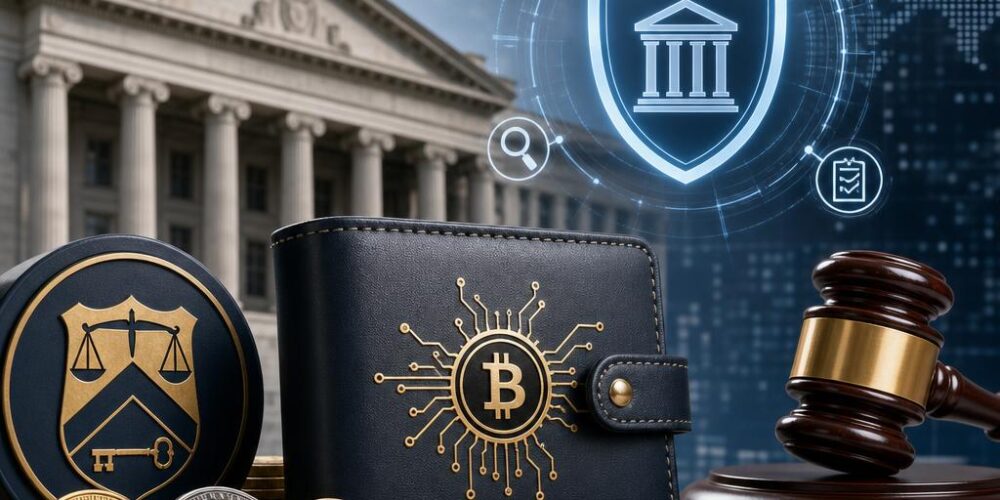
In a significant development affecting the cryptocurrency sector, the United States Treasury has announced a new proposal aimed at tightening regulations around crypto wallets. The proposal, released early this morning, focuses on enhancing the transparency and oversight of digital wallets used for storing and transferring cryptocurrencies such as Bitcoin, Ethereum, and others, in an effort to combat money laundering and terrorism financing.
The recent move by the Treasury is part of a broader crackdown on the illegal use of digital currencies, which are often criticized for their role in criminal activities due to their anonymity and decentralized nature. The proposed regulations will require that individuals who hold crypto in digital wallets not hosted by a financial institution, also known as unhosted wallets, will need to comply with similar regulatory standards that traditional banks follow.
Details of the Proposed Regulations
Under the new regulations, cryptocurrency exchanges will be required to collect, verify, and store personal identification information of individuals who conduct high-value transactions using unhosted wallets. Specifically, any transaction exceeding $10,000 will need to be reported to the Financial Crimes Enforcement Network (FinCEN). Additionally, exchanges must keep records of any transaction worth more than $3,000 involving unhosted wallets.
The Treasury’s proposal also suggests that stricter rules be applied to transactions involving privacy-enhanced cryptocurrencies, which offer greater anonymity to users. Such currencies, including Monero, Zcash, and Dash, will face tougher scrutiny under the new guidelines.
Industry Reaction
The cryptocurrency industry has expressed mixed reactions to the new regulatory proposals. While some stakeholders understand the necessity of regulation to ensure security and transparency, others worry about the impact on privacy and the innovative ethos of the crypto space.
“This regulatory proposal is a double-edged sword,” said Alex Hartman, a cryptocurrency analyst. “On one hand, it helps in mitigating the use of digital currencies for illicit activities. On the other, it imposes significant burdens on crypto users and could potentially infringe on individual privacy.”
Cryptocurrency exchanges, on the forefront of these changes, are particularly impacted. Larger exchanges like Coinbase and Binance have already begun to ramp up their compliance and reporting mechanisms in anticipation of these new rules.
Implications for Crypto Users
For everyday crypto users, the proposed regulations could mean more scrutiny and less privacy. Transactions that might have previously gone unnoticed will now need to be reported and documented, which could deter the use of cryptocurrencies for legitimate personal transactions.
However, supporters argue that increased regulation is necessary if cryptocurrencies are to gain broader acceptance as legitimate financial instruments. They believe that this move by the Treasury could be a significant step towards the maturation and stabilization of the crypto market.
Global Impact and Future Steps
The United States is not alone in tightening its grip on cryptocurrency activities. Countries around the world, including the European Union, China, and South Korea, have all introduced or are in the process of introducing similar regulations.
The Treasury has opened the proposal for public comment and is seeking feedback from various stakeholders before finalizing the regulations. This period of public consultation is expected to last for 60 days, after which the Treasury will review the feedback and make any necessary adjustments to the proposal.
As the regulatory landscape of the cryptocurrency world continues to evolve, the outcome of this proposal will be closely watched by investors, policymakers, and users globally. The balance between regulation and innovation remains a delicate one, and how the United States navigates this path could set a precedent for other nations.
Today’s announcement marks a pivotal moment in the intersection of technology, finance, and regulation. As the debate around the benefits and risks of cryptocurrencies continues, this development adds another layer of complexity to the burgeoning field of digital finance.
Stay Ahead of the Crypto Market
Get breaking Bitcoin, Ethereum & altcoin news the moment it happens. Free instant alerts.