
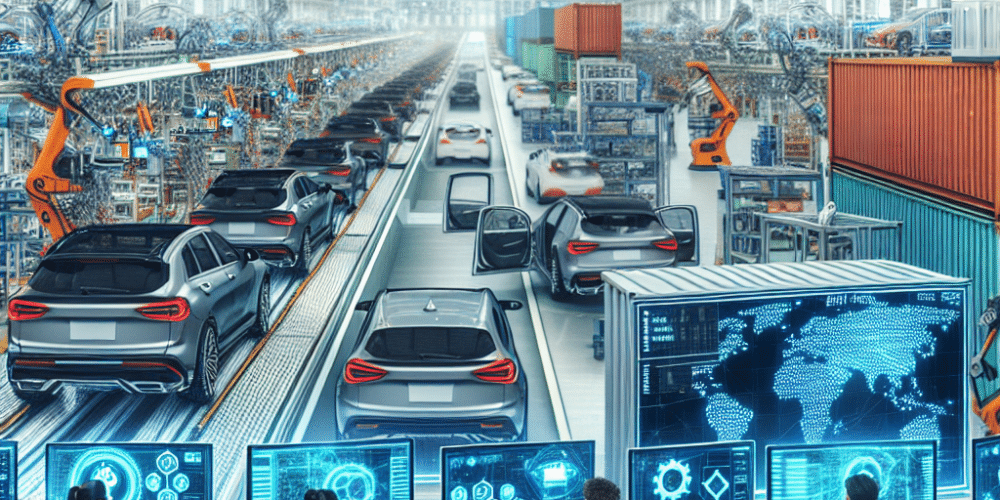
In a groundbreaking move that promises to revolutionize the automotive industry, several leading car manufacturers have announced the integration of blockchain technology into their supply chains. This development, aimed at enhancing transparency and efficiency, marks a significant shift towards a more technologically advanced and secure system in automotive manufacturing.
As of this week, prominent industry leaders, including Tesla, BMW, and Toyota, have confirmed their investment in blockchain solutions to manage complex supply networks involving hundreds of parts sourced globally. This strategic decision was driven by the need to address prevalent issues such as counterfeit parts, supply chain disruptions, and the increasing demand for ethical sourcing practices.
Blockchain technology, a decentralized ledger known for its robust security features and transparency, offers an ideal solution to these challenges. By allowing information to be stored across a network of computers, blockchain technology makes data on the supply chain accessible and immutable. Stakeholders within the chain can view and verify the origins and handling of parts, ensuring authenticity and compliance with environmental and labor standards.
Tesla’s spokesperson highlighted that their adoption of blockchain technology extends beyond supply management into improving customer trust. “At Tesla, innovation is at the core of what we do. By using blockchain to manage our supply chain, we’re not just optimizing the process but also providing a clear trace of car parts right from their origin to the assembly line. Customers buying a Tesla can be assured of the car’s quality and the ethical practices involved in its making,” the spokesperson stated.
Similarly, BMW has incorporated blockchain to tackle the counterfeit parts issue that has plagued many manufacturers, leading to significant financial losses and safety concerns. The unique identifiers recorded on the blockchain allow parts to be authenticated easily, effectively reducing the risk of installing fake components.
Toyota is focusing on leveraging blockchain to enhance its just-in-time manufacturing process. “Blockchain’s real-time data recording capabilities allow us to precisely track component delivery times and adjust our production schedules accordingly. This not only improves our operational efficiency but also helps in reducing unnecessary inventory costs,” mentioned a Toyota executive.
Experts believe that the adoption of blockchain could lead to significant improvements in the automotive sector, especially in terms of reducing lead times and eliminating inefficiencies. Dr. Harriet Green, a professor of Supply Chain Management at MIT, explained, “Blockchain could dramatically transform how we perceive supply chain management. Its application in the automotive industry is just the beginning. We can expect much more widespread use across various sectors in the coming years.”
This initiative also aligns with the increasing regulatory and consumer pressure on industries to demonstrate corporate responsibility and transparency in their operations. By implementing blockchain, car manufacturers not only enhance operational efficiencies but also boost their corporate image, crucial in today’s market where consumers are increasingly aware and concerned about environmental and social governance factors.
Analysts are optimistic about this new trend. A recent report by Market Insights suggests that the blockchain in the automotive market could grow by 30% annually over the next five years. The report forecasts that more companies will likely adopt this technology as part of their digital transformation strategies to stay competitive and meet evolving market demands.
In response to this sector-wide shift, stock prices of companies providing blockchain solutions have seen a surge, reflecting investor confidence in the robust prospects of blockchain applications in industrial settings beyond financial transactions.
As more automotive companies chart their course towards integrating blockchain, the industry stands on the verge of a technological renaissance. This integration not only signifies a leap toward smarter manufacturing and supply chain management but also sets a new standard in the automotive industry’s journey towards sustainability and accountability. With such technology at their disposal, manufacturers can not only streamline operations but also build greater trust with their customers, paving the way for a future where technology drives both efficiency and ethical business practices.
Stay Ahead of the Crypto Market
Get breaking Bitcoin, Ethereum & altcoin news the moment it happens. Free instant alerts.