
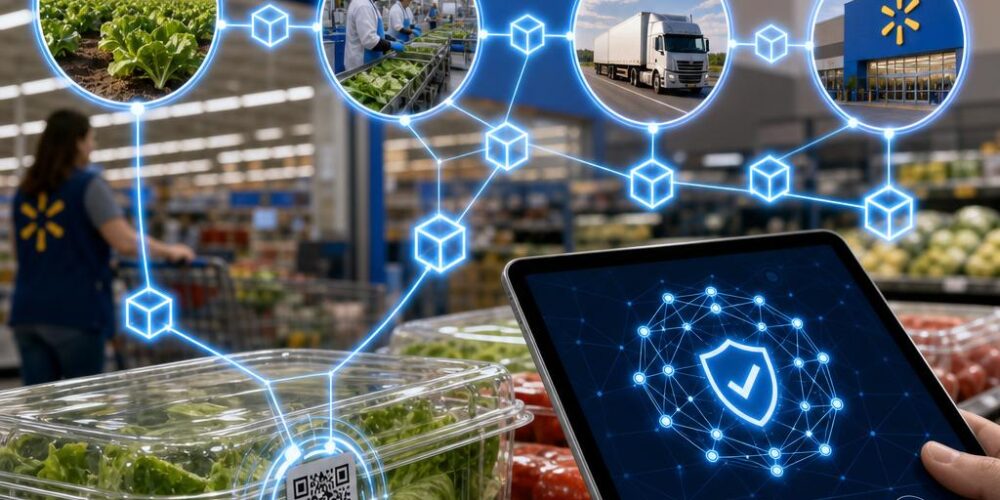
In a groundbreaking move that signals a major shift in food safety practices, global retail leader Walmart has announced the successful integration of blockchain technology across its food supply chains. This innovative step not only enhances traceability and transparency but also significantly reduces the time required to track the source of food items, crucial in managing and mitigating contamination outbreaks.
Walmart, known for its extensive global reach and consumer base, has often been at the forefront of adopting cutting-edge technologies to improve customer experience and operational efficiencies. The latest implementation of blockchain technology marks a pivotal development in the retailer’s strategy to ensure higher food safety standards and foster consumer trust in the wake of increasing food safety concerns globally.
Why Blockchain?
Blockchain technology offers a decentralized ledger system where data once entered is immutable and transparent to all stakeholders. For Walmart, applying this technology means that every transaction involving a food item can be recorded and traced back to its origin in real time. This not only helps in quick response during contamination issues but also aids in better inventory management and reduction in waste.
The Impact on Food Safety
The primary benefit of this technology in food safety lies in its ability to provide real-time tracking and verification of the food supply chain. For example, in the case of a salmonella scare with a particular batch of produce, Walmart can now trace the entire batch back to its origin within seconds, a process that previously took approximately seven days. This rapid response capability not only helps in pulling the contaminated products off the shelves swiftly but also prevents the consumption of potentially dangerous goods, thereby safeguarding public health.
Consumer Confidence
This enhanced transparency is also a significant step towards building consumer confidence. With growing consumer awareness and concern over the origins and safety of the food they consume, Walmart’s blockchain integration reassures customers about the quality and safety of their purchases. “Our customers want to know that they can trust us to ensure that they receive high-quality products that are safe for their families,” mentioned a Walmart spokesperson during the announcement. “This technology helps bridge that trust deficit.”
Operational Efficiencies and Future Prospects
Besides boosting consumer confidence and enhancing food safety, the blockchain technology also streamlines Walmart’s operational processes. The visibility into every step of the supply chain minimizes bottlenecks, enhances forecasting and demand planning, resulting in significant cost savings and reducing food wastage.
Looking forward, Walmart plans to extend this technology across other product categories beyond food, and is exploring synergies with other emerging technologies like AI and IoT to further boost supply chain efficiencies.
Industry Impact
Walmart’s move could potentially set a precedent for the retail industry, prompting other players to explore similar technologies to remain competitive. “Walmart’s blockchain implementation could very well be the tipping point for widespread blockchain adoption in retail,” noted an industry analyst. “It underscores a shift towards more tech-driven, transparent, and responsible retailing.”
Conclusion
Walmart’s integration of blockchain into its food supply chains reflects a transformative approach in the retail sector towards enhancing consumer safety and operational efficiencies. As this technology becomes more mainstream, it will be interesting to watch how other retailers and sectors adopt blockchain to address their logistical and operational challenges, ushering in a new era of enhanced transparency, efficiency, and trust in global supply chains.
Stay Ahead of the Crypto Market
Get breaking Bitcoin, Ethereum & altcoin news the moment it happens. Free instant alerts.