
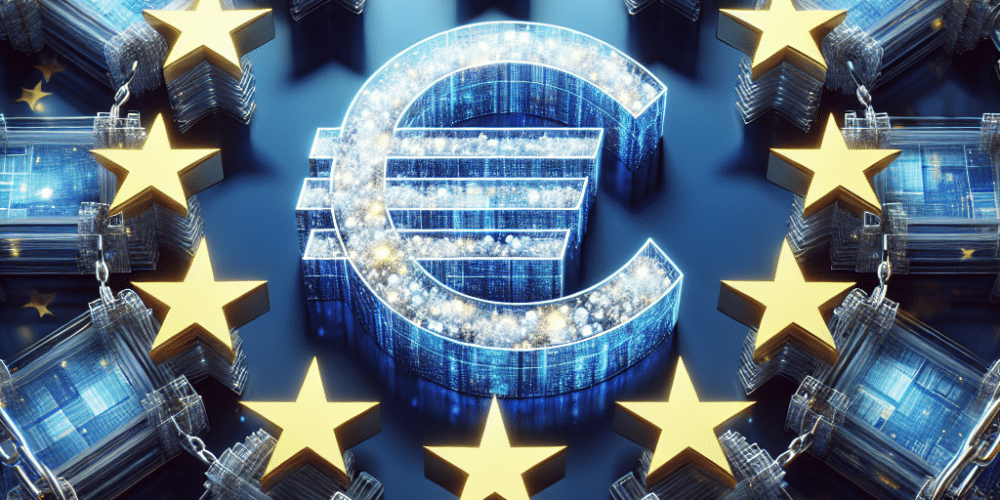
In a significant development that marks a new era of financial and regulatory operations across Europe, the European Commission has unveiled plans to launch the “EuroChain,” a unified blockchain infrastructure. This cutting-edge initiative, aimed at boosting financial transparency and combating fraudulent activities, was announced in Brussels yesterday, setting the stage for a transformative shift in how financial transactions and services are managed across the continent.
Unveiling the EuroChain: A Strategic Move Towards Enhanced Financial Integration
The EuroChain initiative will act as a centralized ledger that will be used by all EU member states, providing a secure and transparent platform for recording and verifying financial transactions. The announcement was made by Ursula von der Leyen, President of the European Commission, during a digital finance summit. She highlighted the dual aim of the project: to enhance financial transparency across Europe and to strengthen the digital economy against the backdrop of increasing digital threats.
“The introduction of EuroChain signifies our strong commitment to harnessing the power of digital technologies to promote financial integrity and innovation within the European Union,” von der Leyen stated. “This blockchain network will not only ensure a high standard of financial transactions but will also uphold our core values of transparency, security, and accountability.”
Technical and Operational Aspects of EuroChain
EuroChain will leverage blockchain technology to provide a decentralized, immutable ledger for transaction logging. It will facilitate real-time monitoring and compliance checks, which are expected to significantly minimize the risks associated with fraudulent transactions and money laundering. The technology will be developed in collaboration with leading European technology firms and is expected to be fully operational by the end of 2025.
Each member state will have designated nodes on the network, ensuring a robust architecture that maintains data integrity and security while allowing seamless cross-border financial operations. Additionally, EuroChain will incorporate smart contracts to automate and streamline regulatory compliance and financial reporting, further enhancing the efficiency of financial markets across Europe.
Implications for Financial Institutions and Businesses
The deployment of EuroChain will require financial institutions across the EU to adapt their operations to integrate with the new system. Banks, insurance companies, and other financial services providers will need to upgrade their systems and train their staff to handle the new blockchain-based procedures.
“This is a call to action for all financial entities within the EU to align with EuroChain’s protocols and set a gold standard in financial transactions,” explained Christine Lagarde, President of the European Central Bank. “It will not only safeguard against financial malpractices but also foster a more integrated European market.”
Businesses operating in the EU will also stand to gain from EuroChain’s enhanced financial transparency. With clearer transaction trails and reduced risk of fraud, companies can expect a more stable and trustworthy environment for conducting business, which could be particularly beneficial for small and medium-sized enterprises (SMEs) that are more vulnerable to financial discrepancies.
Public Reaction and Future Prospects
The announcement has received a mixed reaction from various stakeholders. While many industry experts have lauded the initiative as a progressive step toward digital finance, some skeptics have raised concerns about privacy and the centralization of financial data.
Despite the concerns, the European Commission has reassured that EuroChain will be developed in strict adherence to GDPR and other privacy laws, ensuring that personal and corporate data are protected.
As the EuroChain project moves forward, it will be crucial for all stakeholders to engage in a detailed dialogue to address concerns and optimize the benefits of this ambitious project. The next few years will be critical as the EU tests the resilience and efficacy of the EuroChain, potentially setting a global benchmark in the use of blockchain for financial and regulatory transparency.
Stay Ahead of the Crypto Market
Get breaking Bitcoin, Ethereum & altcoin news the moment it happens. Free instant alerts.